Conclusion of Cycle 12 at ALMA: A Historic Record Driven by Teamwork
With more than 4,700 hours of science delivered to the international community, the recent cycle marks a historical milestone achieved thanks to coordinated work, adaptability, and the commitment of every department and individual across the observatory.
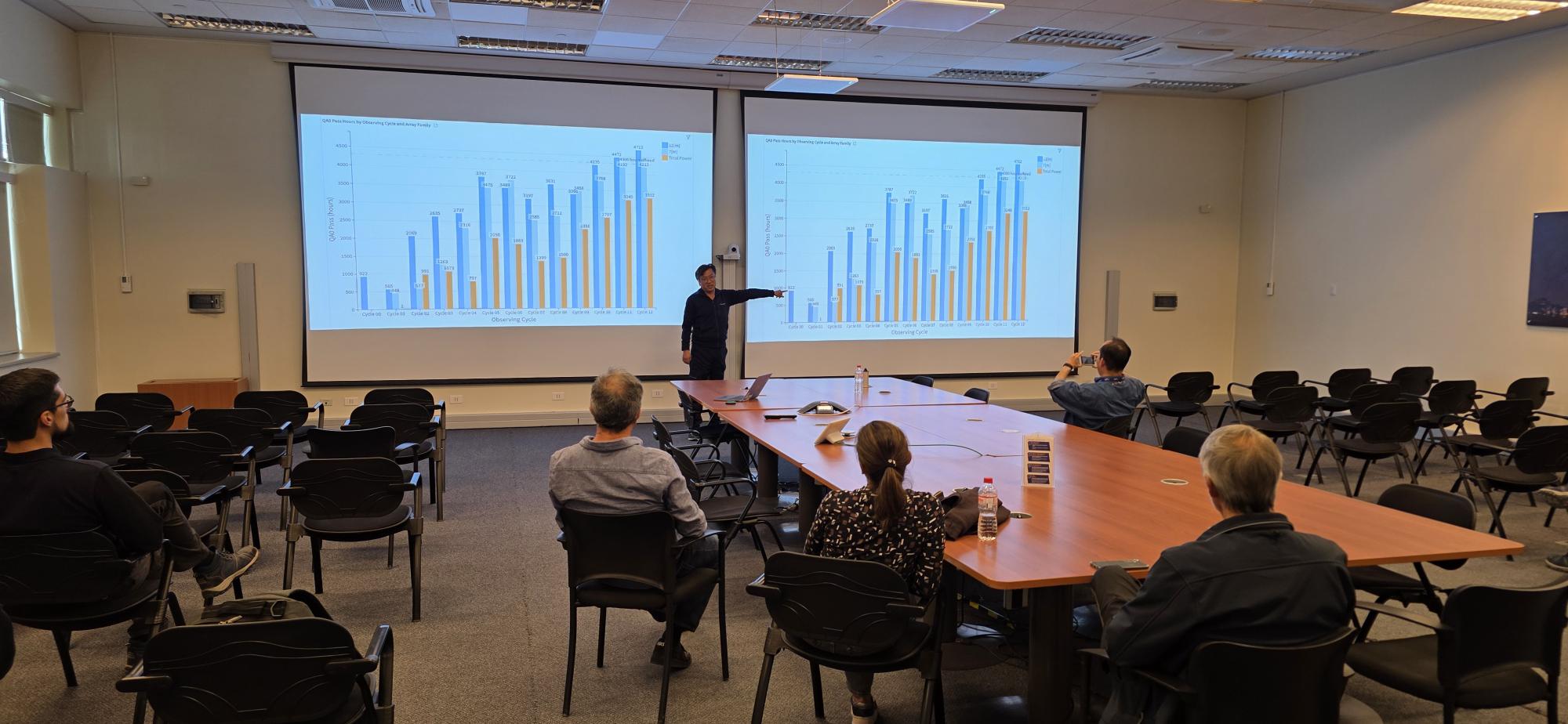
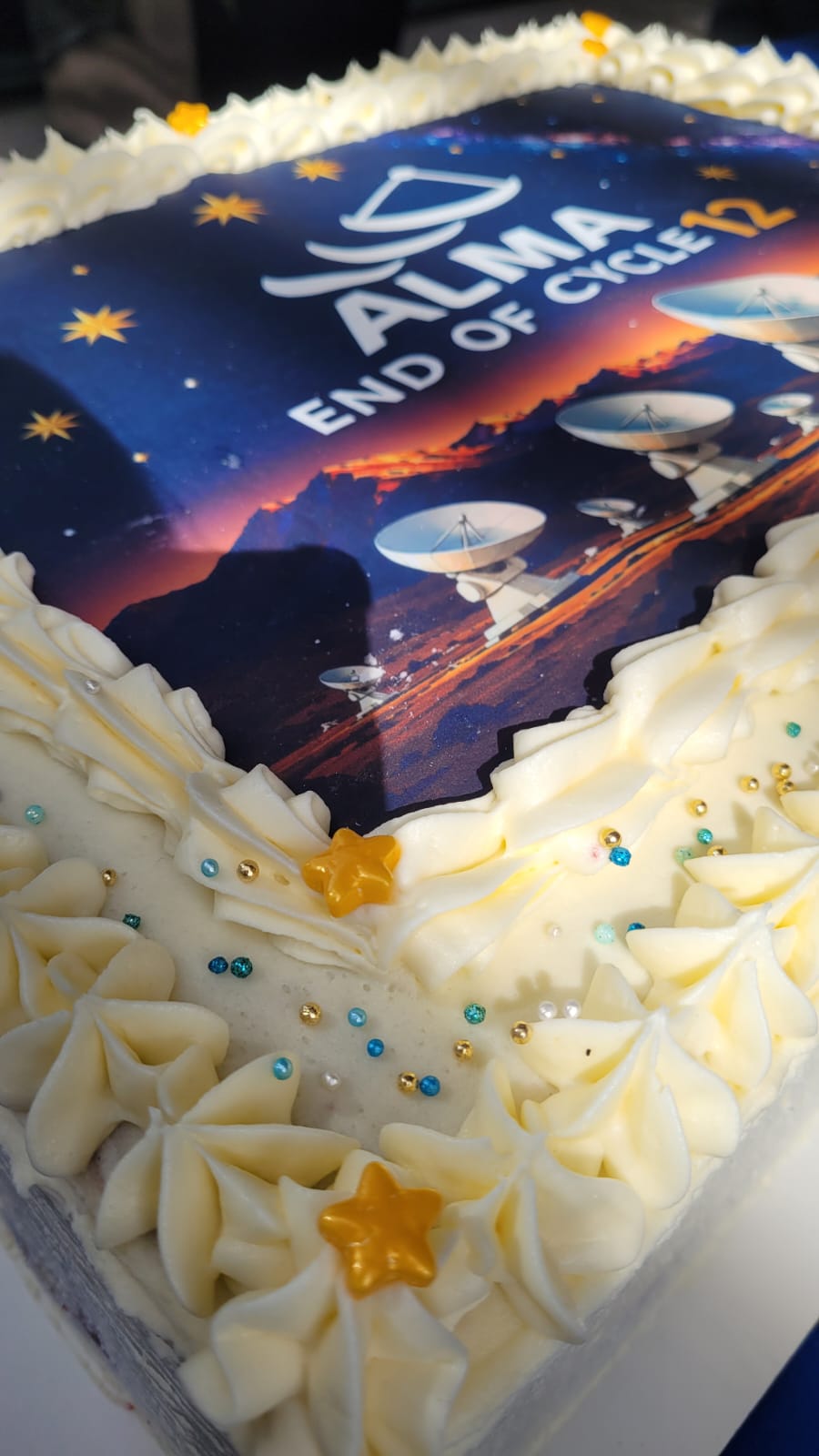
Cycle 12 of observations at ALMA has come to a close, leaving an indelible mark: it was the most successful observation period in the history of our observatory. For the first time, more than 4,700 hours of scientific observations were acquired and delivered to the global astronomical community with the 12-meter Array, surpassing all previous records.
This achievement becomes even more significant when considering the adverse conditions encountered along the way. Weather variables alone resulted in the loss of nearly 1,400 observing hours: the highest figure recorded in the last decade. Despite this and complex operational challenges on site, the adaptability, resilience, and collective effort of the entire ALMA team kept the mission on track.
The proposal selection process for Cycle 12 once again confirmed the massive scientific demand that ALMA generates globally, with a total of 1,640 proposals received requesting more than 30,000 hours of observation on the main array (12-m Array). Following evaluation by the community through the distributed peer review system, 4,170 highest-priority hours (Grades A and B) were assigned across 211 projects, maintaining a strict balance among the regional shares of Chile, East Asia, Europe, and North America.
Among the selected projects, six new Large Programs stood out, high-impact initiatives designed to address fundamental questions in contemporary astrophysics. These studies ranged from characterizing protoplanetary disks around the galaxy’s most common stars and tracking molecular clouds on a 10-parsec scale, to exploring dust and interstellar medium physics during “Cosmic Dawn” and mapping galaxies in intermediate merger phases.
“Cycle 12 showed us what we are made of. The adaptability of every area, from those maintaining the antennas and site infrastructure to those managing logistics, administration, and science operations, allowed us to achieve an unprecedented milestone. I am deeply proud of what we have accomplished together in this cycle,” highlighted Sean Dougherty, ALMA Director.
A Historic Cycle Beyond Observing Hours
The success of Cycle 12 cannot be measured in screen time alone. During this period, the observatory actively participated in a historic nine-week global campaign alongside 16 observatories worldwide to capture the first movie of the black hole at the center of the M87 galaxy.
In parallel, major strides were made in key projects for the future of the observatory: the deployment of Band 2, the first receiver compliant with the Wideband Sensitivity Upgrade (WSU) standards, set to debut in Cycle 13, is nearing completion; the transformation of the Correlator Room in the Technical Building at the Operations Support Facility (OSF) is progressing; and a new optical fiber connection was installed between the AOS and the OSF.
“While the scientific impact ALMA creates is clearly visible, the immense number of working hours behind it, at the AOS and OSF, in the SCO, and with the support of the Executives, is rarely seen. This cycle was a success because every department understood that its work is essential for science to happen. To all ALMA staff, my deepest congratulations,” noted Sergio Martín, Head of the Department of Science Operations (DSO).
For his part, John Carpenter, Observatory Scientist, addressed the impact of this cycle’s success on the global astronomical community: “Cycle 12 represented an extraordinary team effort. Despite losing nearly 1,400 hours to weather, our teams continuously adapted to optimize conditions and deliver over 4,700 hours of scientific observations. This achievement demonstrates the incredible preparation, coordination, and dedication across ALMA. But above all, each of those hours translates into data that will allow the astronomical community to investigate everything from the origins of stars and planets to the evolution of galaxies and the Universe.”
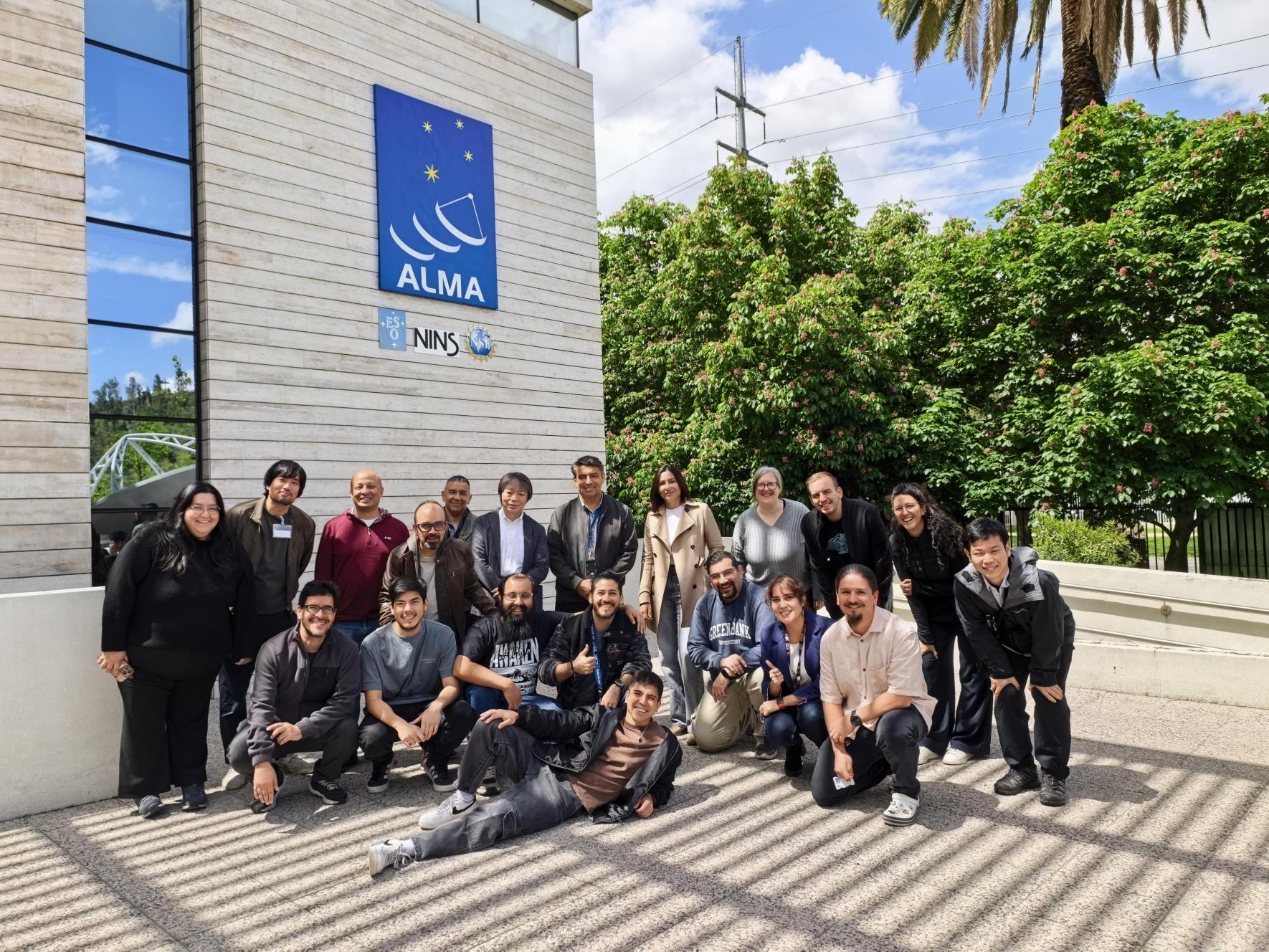
The milestone reached in Cycle 12 is the tangible result of the commitment of every department within ALMA. Beyond record-breaking numbers and complex operating conditions, the observatory’s ability to meet the demands of global astronomy lies in the harmony among those who plan, operate in the field, maintain technical infrastructure, and provide support across different offices. It is this coordinated, behind-the-scenes work that sustains the telescope’s scientific leadership every day.
Looking ahead to the immediate future, the lessons learned and momentum gained from this cycle lay a solid foundation for tackling the challenges appearing on the horizon. The upcoming arrival of Cycle 13, marked by the deployment of Band 2 and progress toward the Wideband Sensitivity Upgrade (WSU), will find a consolidated team ready to continue pushing the boundaries of what ALMA can deliver to global science.