Celebrating 15 Years of Our First Image: ALMA Opens the Doors of the OSF to the Community
For the first time since the onset of the pandemic, the observatory welcomed public visitors to its northern facilities. At the same time, the organization gave visitors from across the country the opportunity to tour its central offices in the capital, reaffirming its commitment to scientific outreach and community engagement.
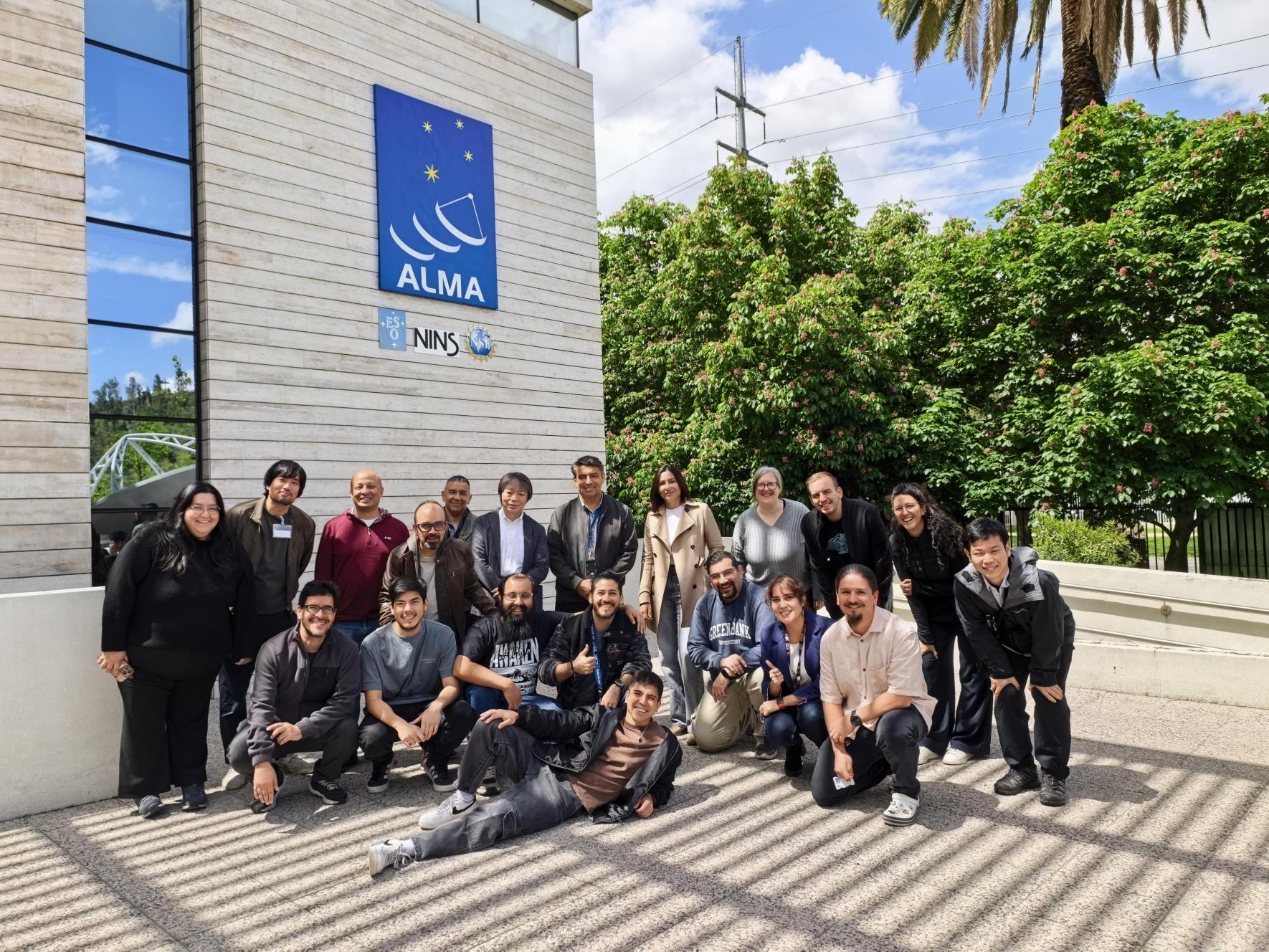
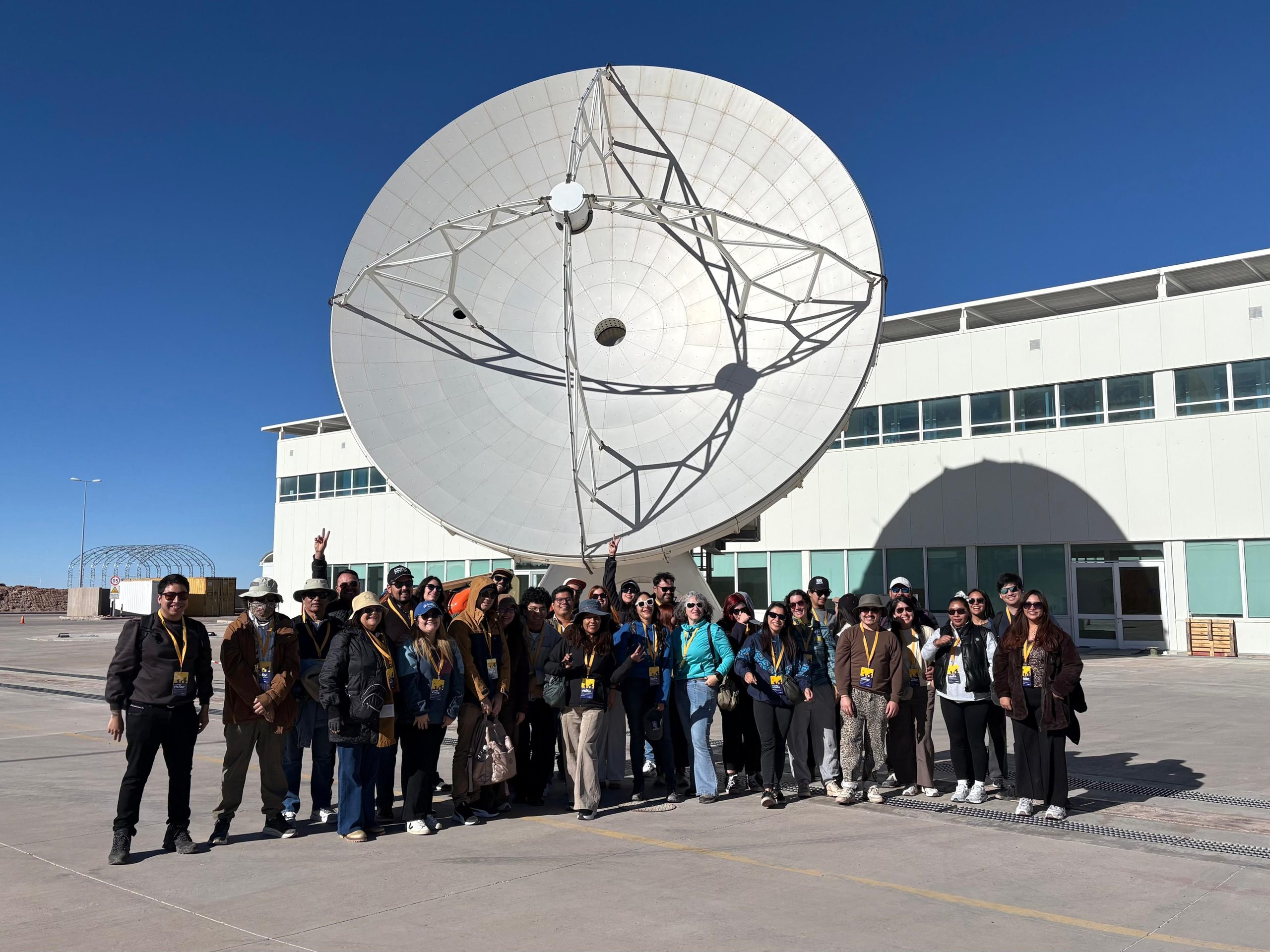
ALMA reopened its doors to the public at the Operations Support Facility (OSF) through two Open House sessions. The guided tours allowed 160 visitors to explore the observatory’s facilities and get an up-close look at the technology, the daily work of staff, the laboratories, and the human team behind the world’s most powerful radio telescope. In parallel, the observatory also included its Santiago offices in the activities of the OH! Santiago urban architecture festival, offering guided tours of its premises.
“This year, Science Month in Chile coincided with the celebration of the 15th anniversary of ALMA’s first image, and we wanted to commemorate it in a special way: by opening the doors to our facilities in Santiago and at the OSF. Over 400 people had the opportunity to closely experience our work, meet the people who make ALMA possible, and discover the value of our contribution, not only to our understanding of the Universe, but also to the communities and territory where we operate. These experiences remind us of the importance of bringing science closer to people and strengthening our bond with society,” explained Karina Haller, EPO Manager.
Reconnecting in Atacama: The Return of Public Visits to the OSF
ALMA Open House 2026 took place across two consecutive Saturdays: October 17 and 24, split into two daily shifts (morning and afternoon). Following a bus trip from San Pedro de Atacama, the 160 attendees began a guided tour through the observatory’s various operational stations.
The experience began in the Yakana Room with an institutional welcome addressing 15 years of ALMA’s scientific discoveries, the international collaboration that enables the observatory’s work, and the impact of astronomy on Chile’s scientific and inclusive development.
“I am very happy to have participated in the first Open House held by ALMA since the pandemic. In my experience, there is a lot of interest in astronomy among the general public, and I think this visit offers a unique opportunity to learn not only about science, but to see how it is carried out in the country. This generates immense enthusiasm among visitors, proving the value of opening these opportunities to connect with the community,” highlighted Carolina Finlez, ESO-ALMA Fellow, who gave four explanatory presentations for visitors.
Next, visitors moved through the technology laboratories, where they learned about how the Front End operates, including the arrival of the new Band 2, as well as the Amplitude Calibration Devices (ACD) and high-precision mechanisms like the subreflector hexapod.
“Seeing these kinds of facilities connects you to space and shows how ALMA brings us closer to answering questions we didn’t even know existed. We organized our trip from Iquique, secured tickets, and traveled specifically for this. It was a wonderful experience, one of those once-in-a-lifetime moments,” said Jorge García, a visitor from the Tarapacá Region.
Meanwhile, Patricia de Aguiar, a Brazilian tourist who attended the October 24 session, commented on the impression made by touring the observatory’s various facilities: “Visiting ALMA opens your mind. It’s incredible to go from seeing history and information in a presentation to standing here in person, inside the hangar and in front of the antennas, seeing it all with your own eyes. We are deeply grateful for the opportunity they provide by opening these doors to people from different parts of the world.”
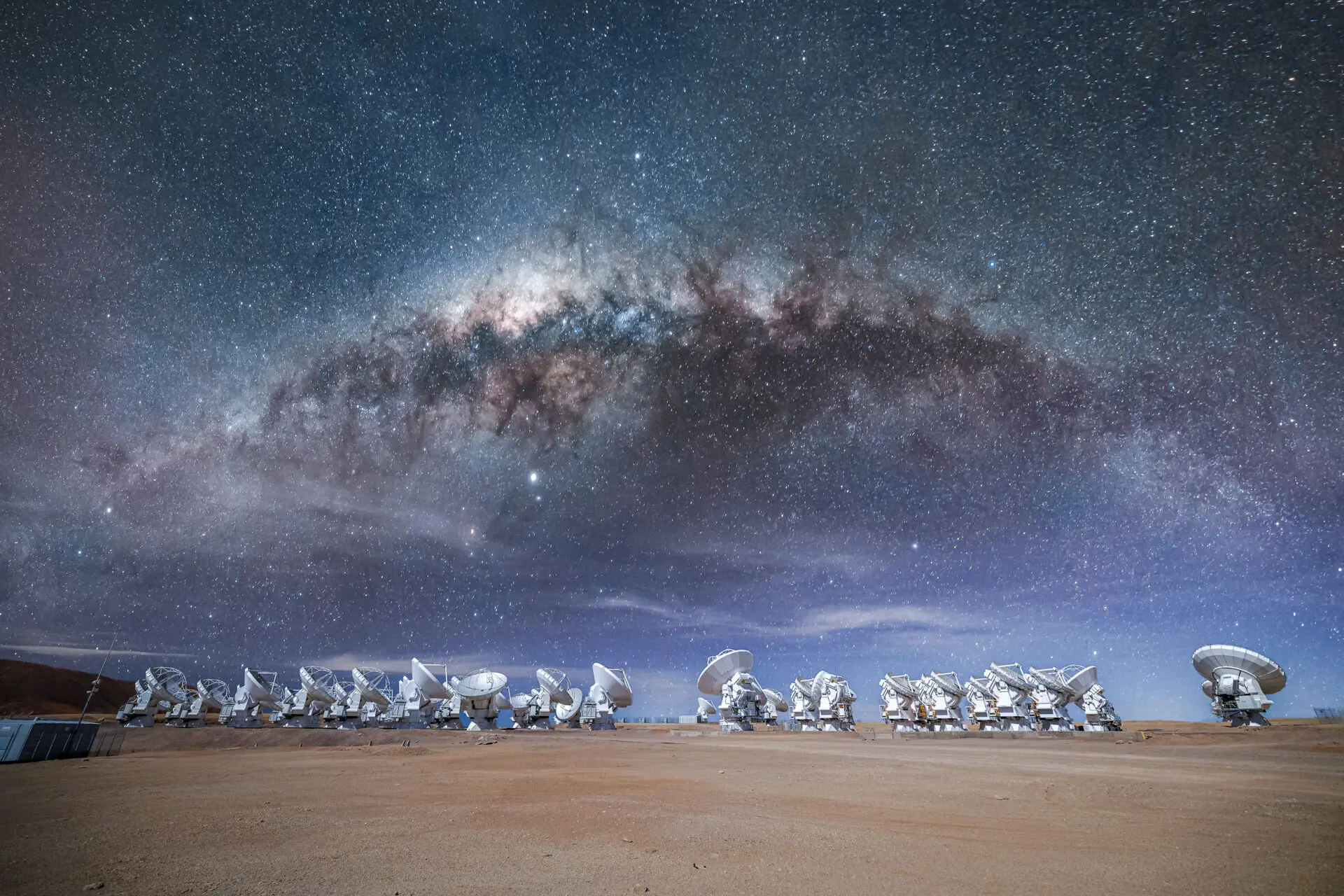
The itinerary continued in the Control Room, the operational heart where astronomers on duty and operators monitor data collection in real time from the 66 antennas on the Chajnantor plateau. Later, in the Main Conference Room, participants delved into the integration of multidisciplinary teams and the observatory’s future projects, such as the major technological upgrade known as the Wideband Sensitivity Upgrade (WSU).
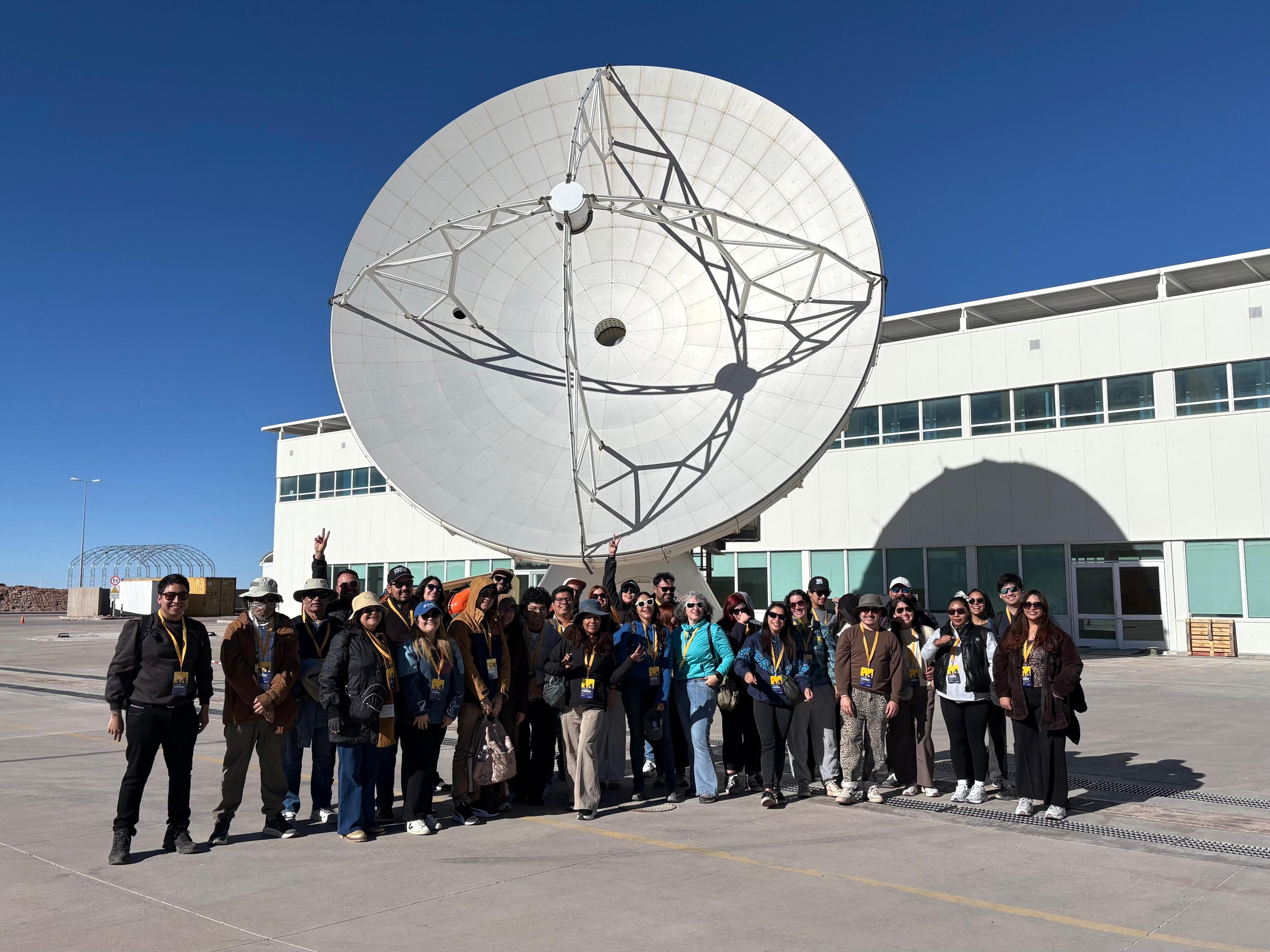
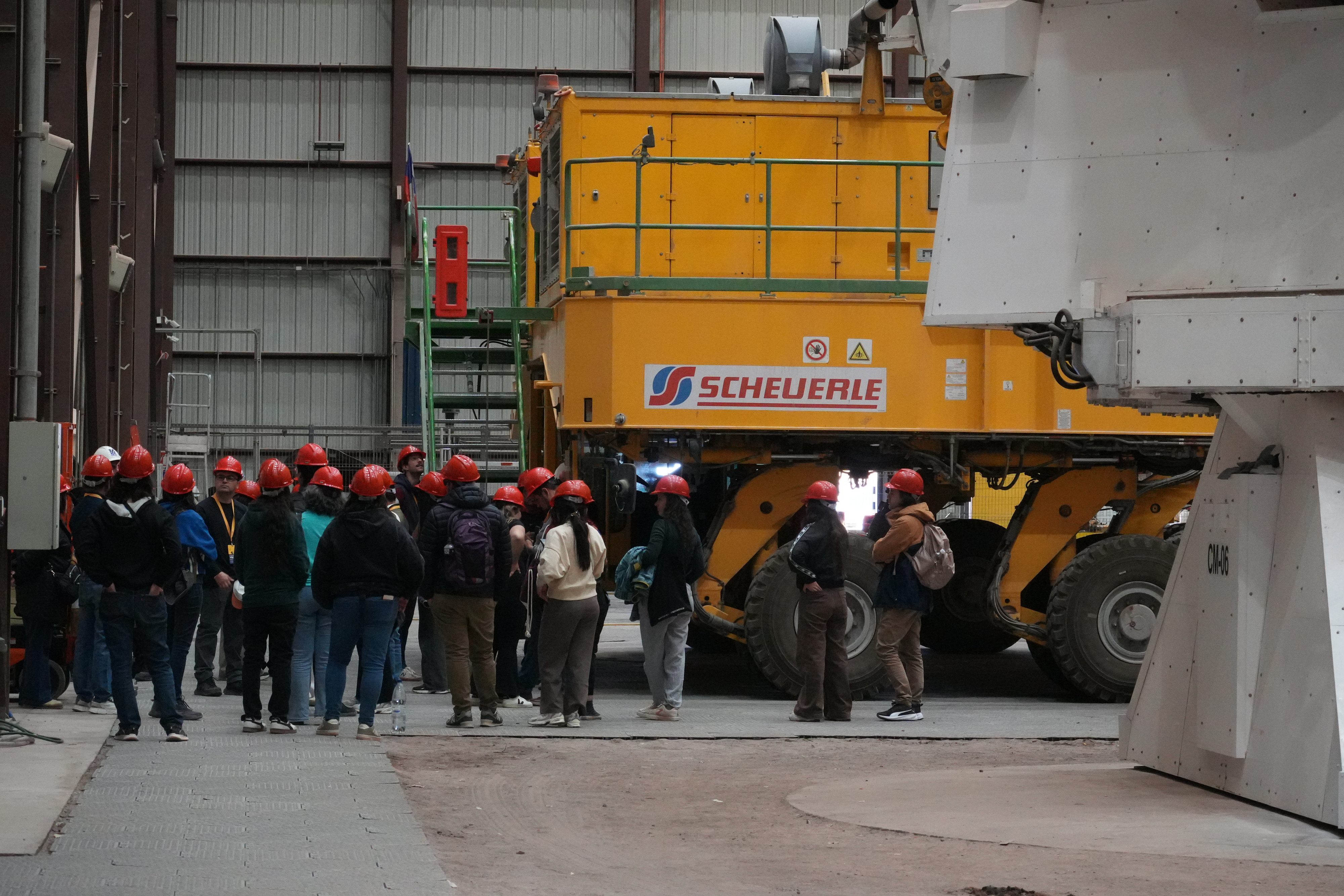
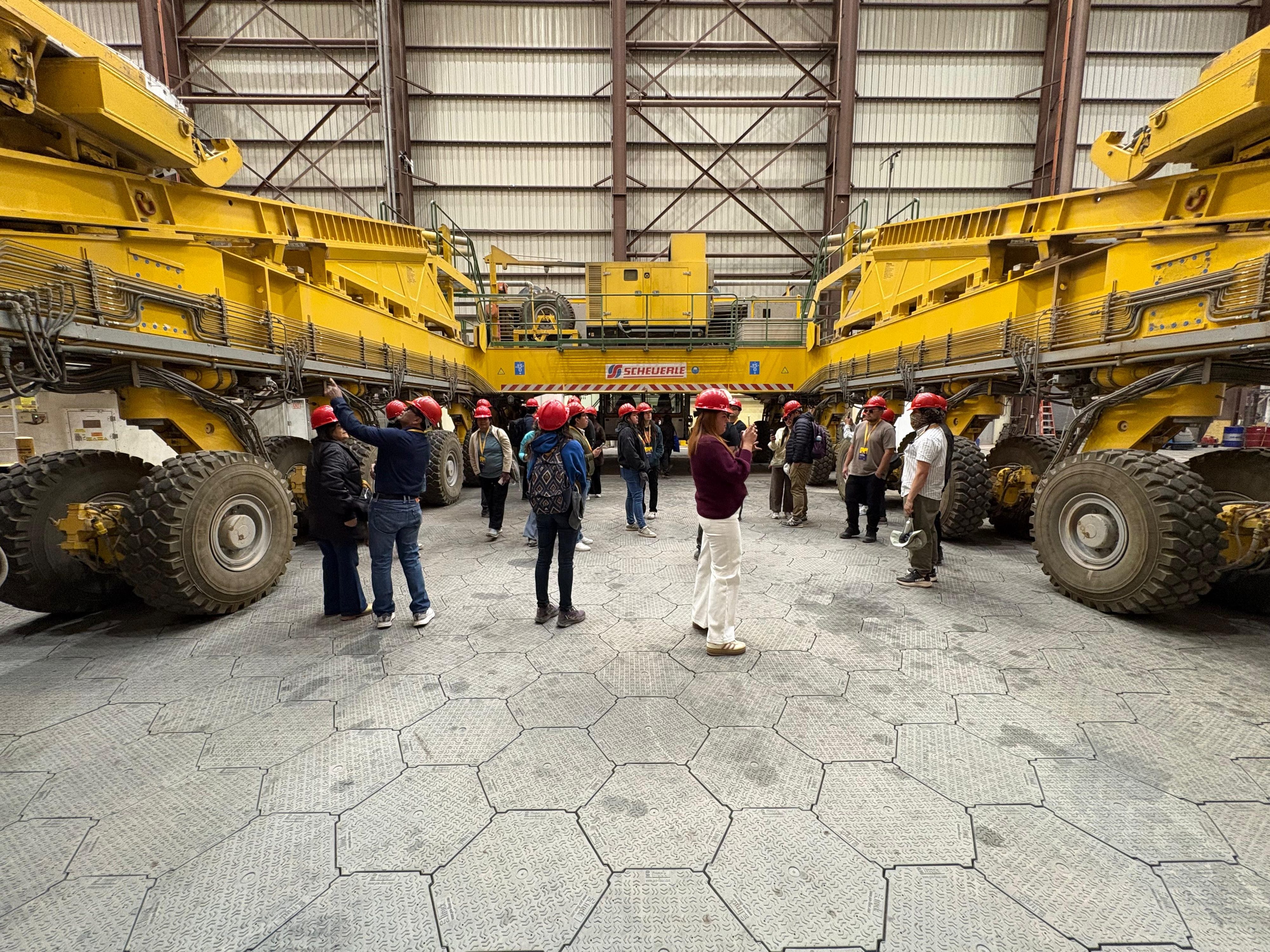
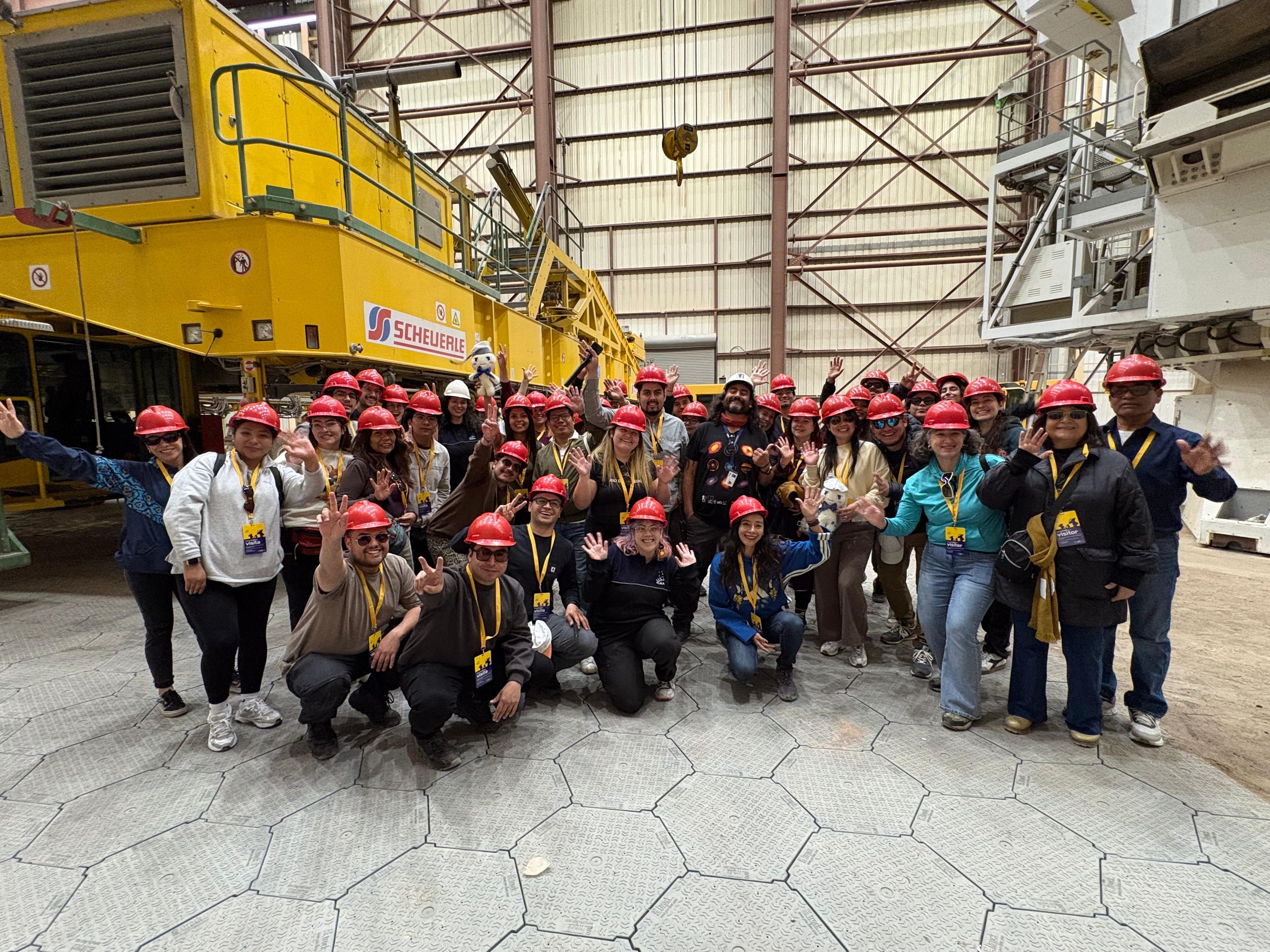
The highlight of the tour took place inside the Vertex Hangar, where visitors stood close to one of ALMA’s antennas to appreciate its imposing dimensions and understand the technical aspects of its maintenance. Additionally, the public got a detailed look at ‘Otto’, one of the two 28-wheel, 130-ton transporters designed exclusively for the observatory, whose engineering allows antennas to be moved and positioned across the Chajnantor plateau according to the needs of each scientific configuration.
OH! Santiago: Science Explained from the Capital
Concurrently with the events in the north, ALMA actively participated in a new edition of OH! Santiago, opening the doors of its central offices in the capital to 240 visitors.
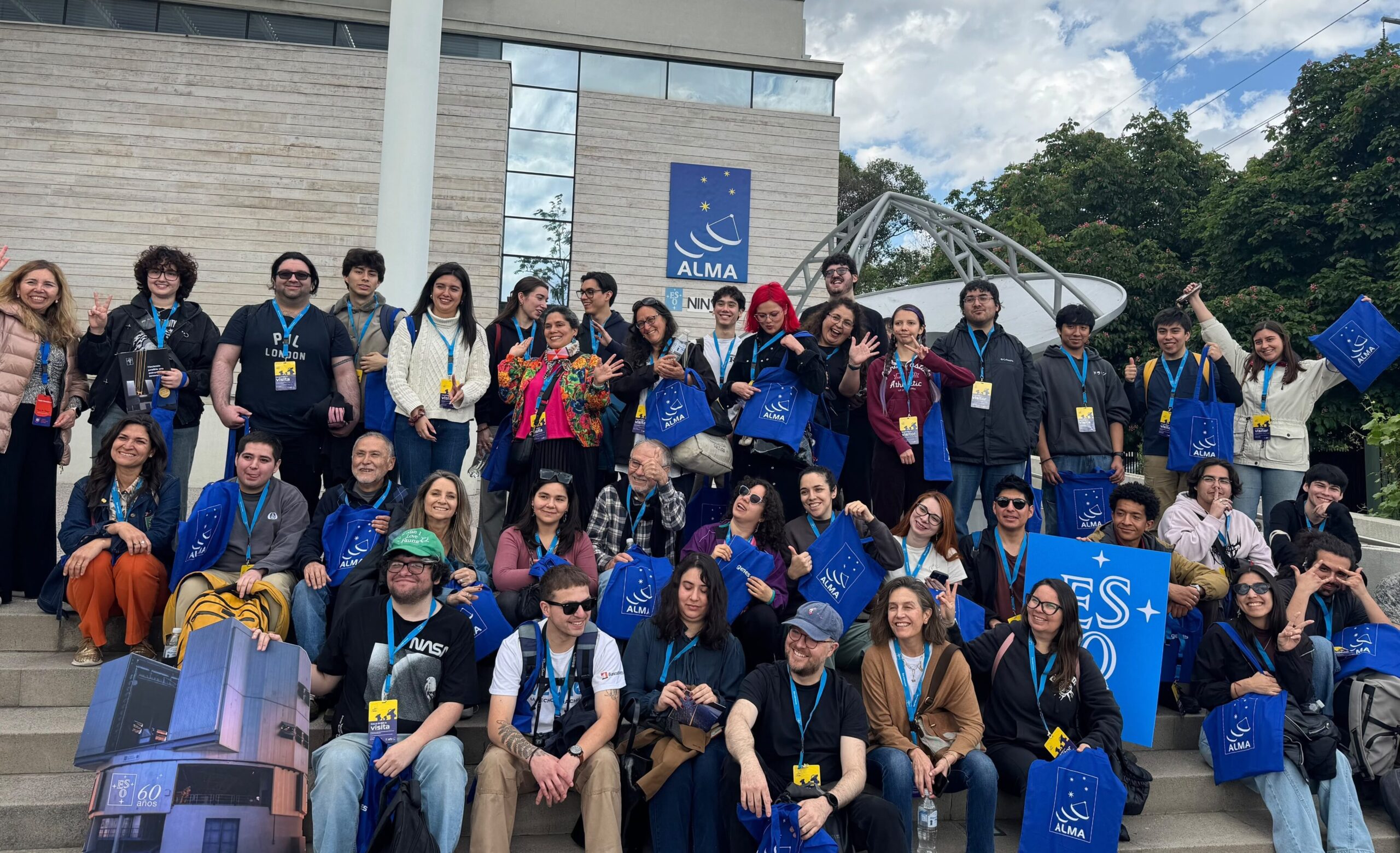
In dynamic 30-minute tours, attendees explored the main facilities at the Santiago observatory site. The visit included a stop at a scale model of an ALMA antenna, where guides explained the fundamental principles of radio astronomy, how interferometry works, and how millimetric waves from the universe are detected.
The itinerary also covered the facility’s courtyards and the Santiago Control Room, a space where observing conditions are monitored, data quality is assessed, and remote operations with the AOS are coordinated.
“Experiences like these fill us with pride and reaffirm our commitment to continue bringing ALMA closer to people, inspiring children, youth, and adults to connect with the Observatory’s purpose, sparking their curiosity, and fostering new scientific callings or simply marveling at the discoveries that allow us to better understand the Universe,” concluded Karina.