Infrastructure & Maintenance Group (IMG): The Preventive Work of a Team Sustaining Observatory Operations
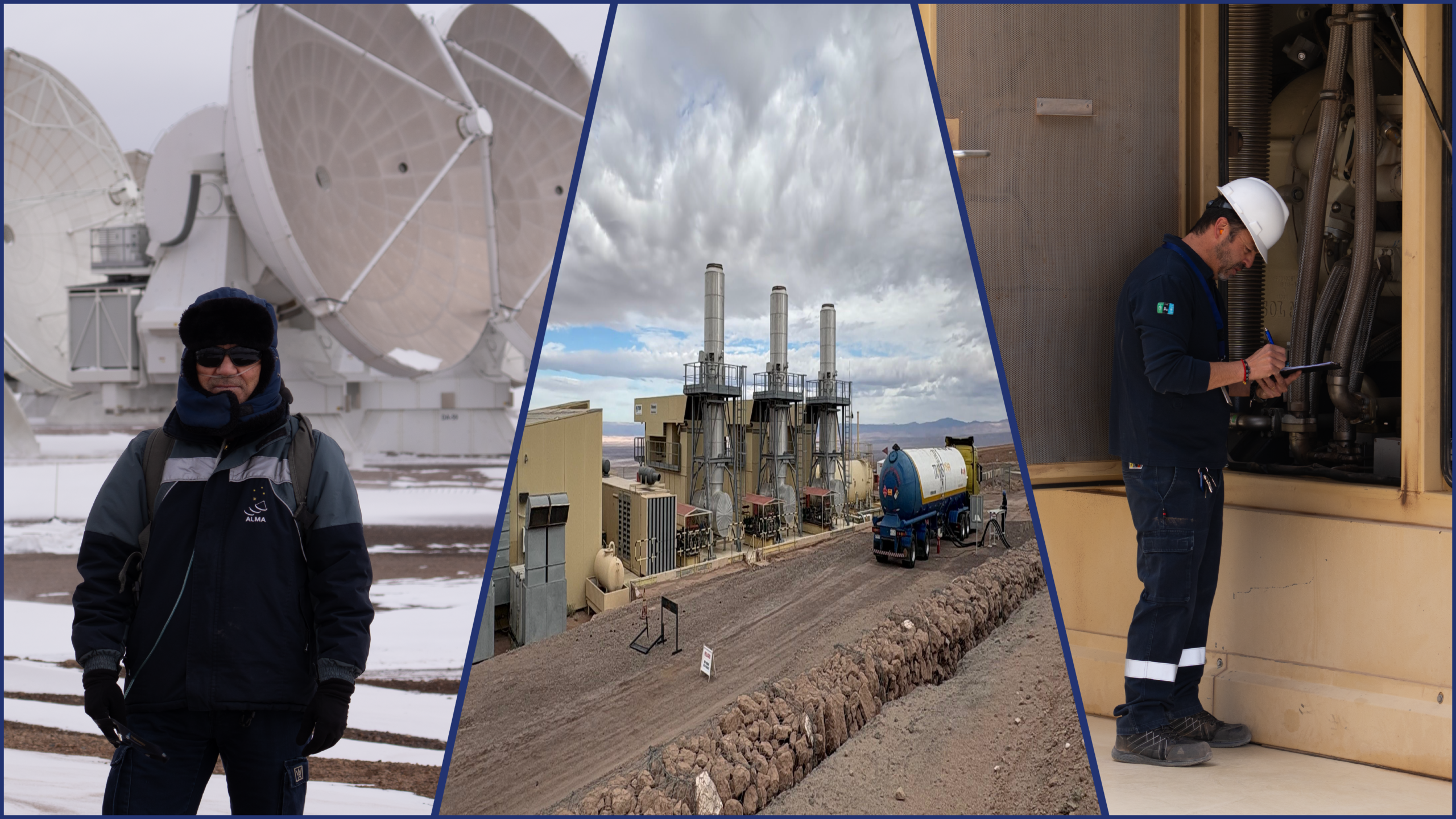
We joined a preventive inspection and maintenance shift at the OSF and the AOS led by the Infrastructure & Maintenance Group (IMG) team to ensure the optimal performance of the equipment powering the observatory.
Saturday morning. The IMG team prepares for another workday at the observatory. From the OSF offices, gusts of wind can be felt outside, a clear sign that a weather change is approaching. In fact, significant snowfall is expected at the AOS on Monday, making the inspection and maintenance of key equipment and facilities an absolute priority.
“For inspections, the main objective is essentially to monitor the health status of equipment and systems, carry out maintenance activities that help us preserve their operational quality, detect deviations requiring corrective action, and so on. On the other hand, it is essential to guarantee adequate environmental conditions and maintain precautionary measures for the observatory’s critical instrumentation to ensure its proper operation. This is of utmost importance given that ALMA is a one-of-a-kind observing instrument,” explained Rolando Olivos, IMG Manager.
Due to its remote location, ALMA cannot connect to the national power grid, so it must generate its own energy locally. The observatory operates three 60,000-liter diesel tanks and three butane tanks with a capacity of 206,000 liters each. As a result, one of the team’s top priorities is monitoring fuel offloading, a procedure governed by strict safety protocols that mitigate the risks associated with this type of maneuver.
“This is silent work. We aim to maintain high availability across power generation and distribution, HVAC, and fire suppression systems so that every department can operate safely and without interruption. Our focus is safety and coordination,” emphasized Cristián Egaña, IMG Supervisor.
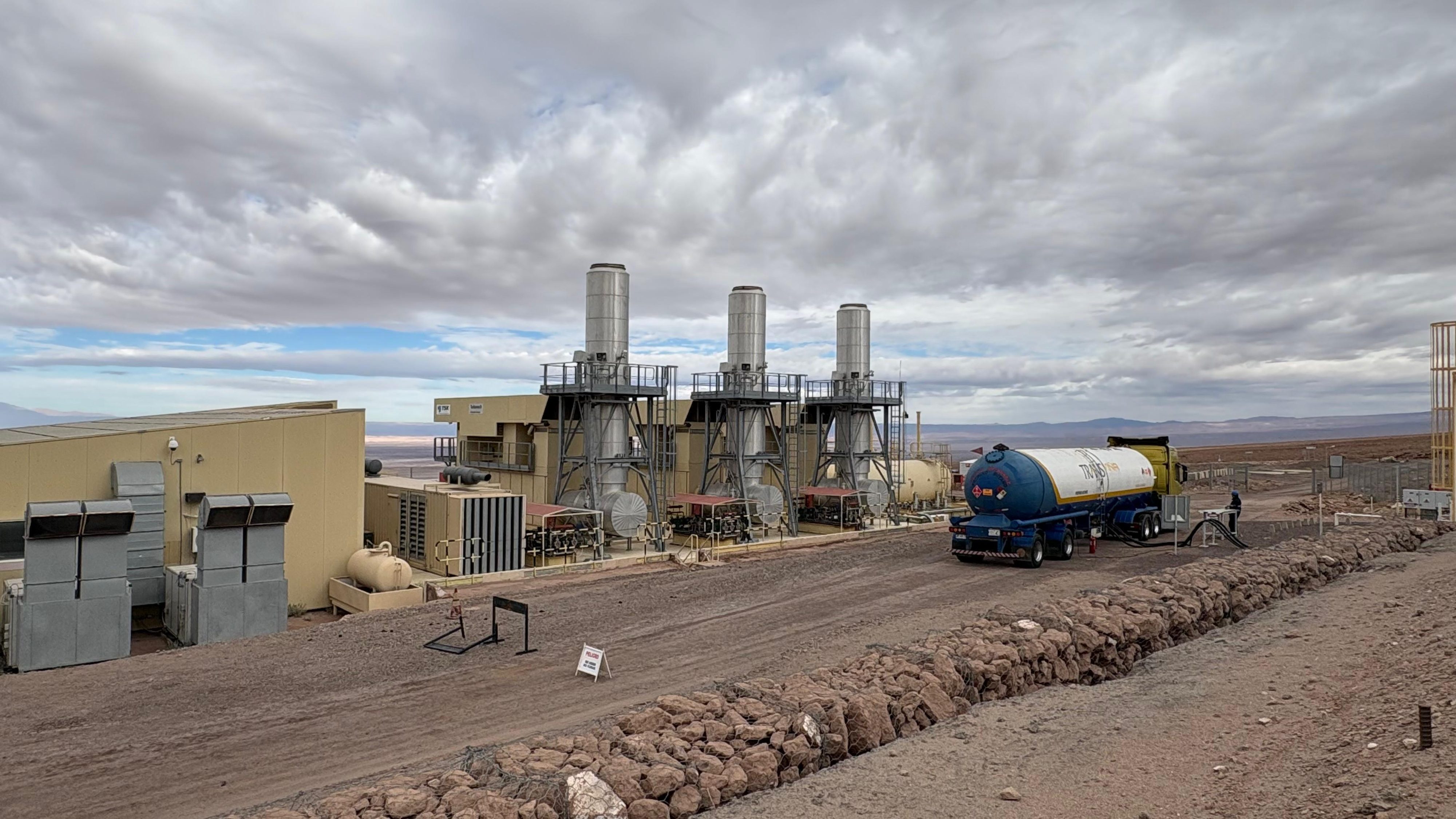
While the fuel delivery inspection takes place, José Garroz, Power Team Operator, carries out the inspection and maintenance of the turbines. First, real-time monitoring is conducted from the control room, where all parameters related to power generation are tracked and logged. Then, a visual inspection of the equipment follows, verifying the mechanical and electrical operation of each turbine. Although each turbine is designed to generate 4 MW, the high altitude where they are located causes a slight derating, bringing their maximum real capacity to 3.8 MW. Nevertheless, the average power consumption of the entire observatory, around 2.5 MW, is fully covered by a single operating turbine.
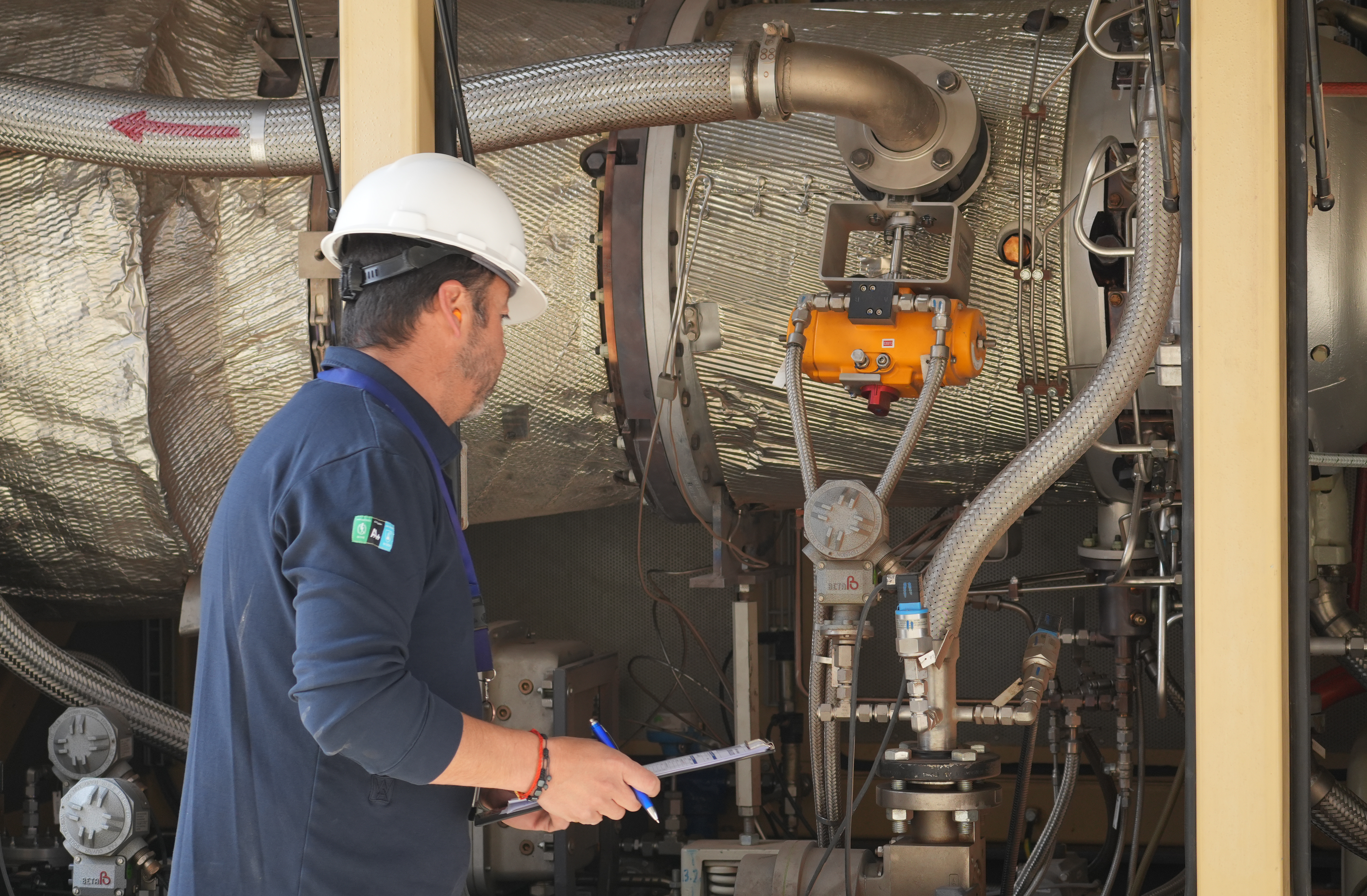
“All our electrical systems are dual-redundant and backed up against failures, allowing us to monitor real-time variables such as power output, fuel consumption, and temperature directly from the control rooms. This enables us to guarantee service continuity and secure operations. That is why maintenance and inspections are key processes: they ensure that primary and backup systems are fully operational,” José explained.
One of the operational turbines powering the observatory.
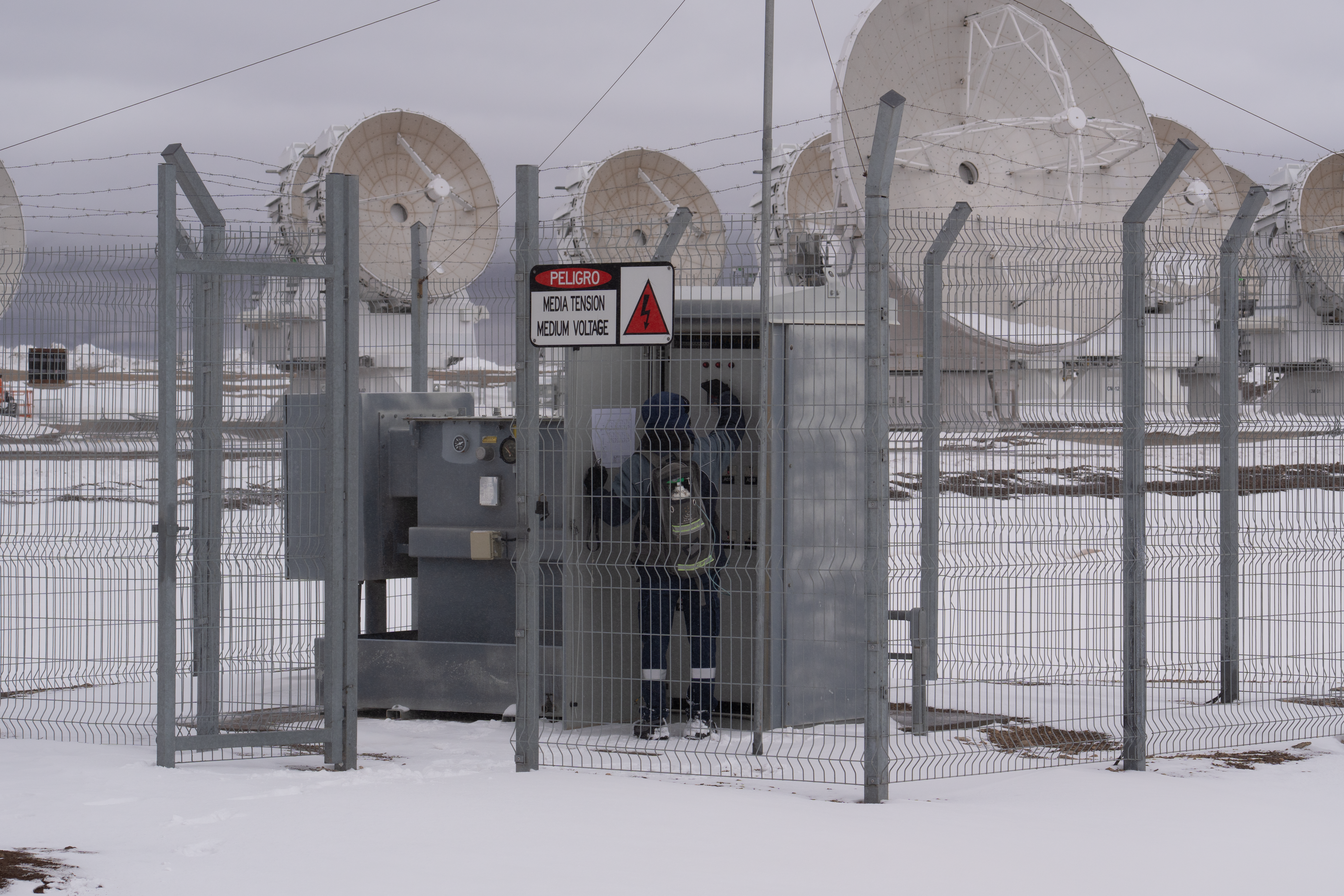
Parallel to the work being carried out at the OSF, Manuel Pérez, Power Team Operator, heads to the AOS to perform an inspection and maintenance of the Switch Gears, the control, protection, and distribution hubs of ALMA’s electrical system. Their main function is to receive centrally generated power and direct it to the pads where the antennas connect. They act as an intelligent shield: using a combination of switches, disconnectors, and automated relays, they detect any fault, overload, or short circuit to immediately isolate the affected section within a fraction of a second.
“This equipment is vital for operations because it ensures that power flows stably and safely in an environment of extreme altitude and often complex weather conditions. They protect astronomical instruments from damage and allow us, as the IMG team, to safely de-energize specific areas for preventive maintenance without interrupting ongoing observations or other critical processes,” Manuel detailed.
Amid the cold temperatures and wind at the AOS, precursors to Monday’s snowstorm, Manuel inspects all electrical components to confirm they are in optimal condition. After approximately an hour and a half of inspection, Manuel gives the green light: all equipment is ready to continue powering the antenna array.
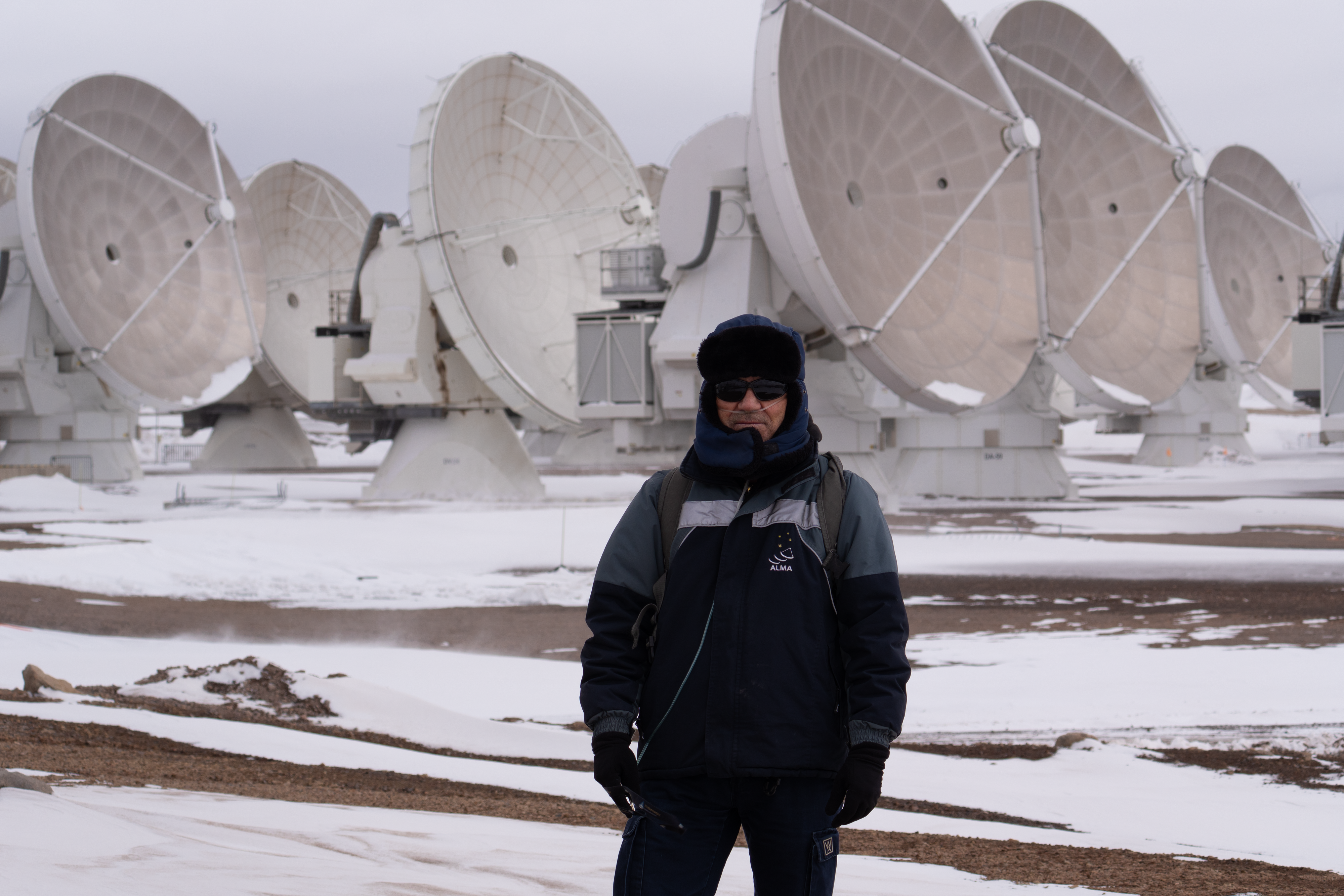
Sustaining an infrastructure of this scale demands planning that spans from weekly electrical task reviews to constant procedure updates under international standards and a rigorous safety program.
“Our core responsibilities include power generation and distribution, as well as maintaining air conditioning, fire suppression, and communications systems,” explains Rolando. “Today, we face the challenge of operating in a mature observatory, where components reflect the passage of time. Through our master plan in the Computerized Maintenance Management System (CMMS) and constant equipment health monitoring, our priority is to ensure operational quality in preparation for future milestones such as the WSU and the observatory’s energy sustainability.”
From power generation at the OSF to high-precision maneuvers at the AOS and preventive planning focused on future progress, the IMG team reaffirms its role as an essential pillar of ALMA. It is a human and technical effort that, day after day, protects facilities, keeps people safe, and sustains the observatory’s operational continuity.