Software Evolution, WSU, and Artificial Intelligence: Milestones and Insights from the Dataflow & AES Workshop
Brought together observatory teams and regional centers to align digital infrastructure, prepare systems for the upcoming broadband upgrade, and coordinate practical automation initiatives.
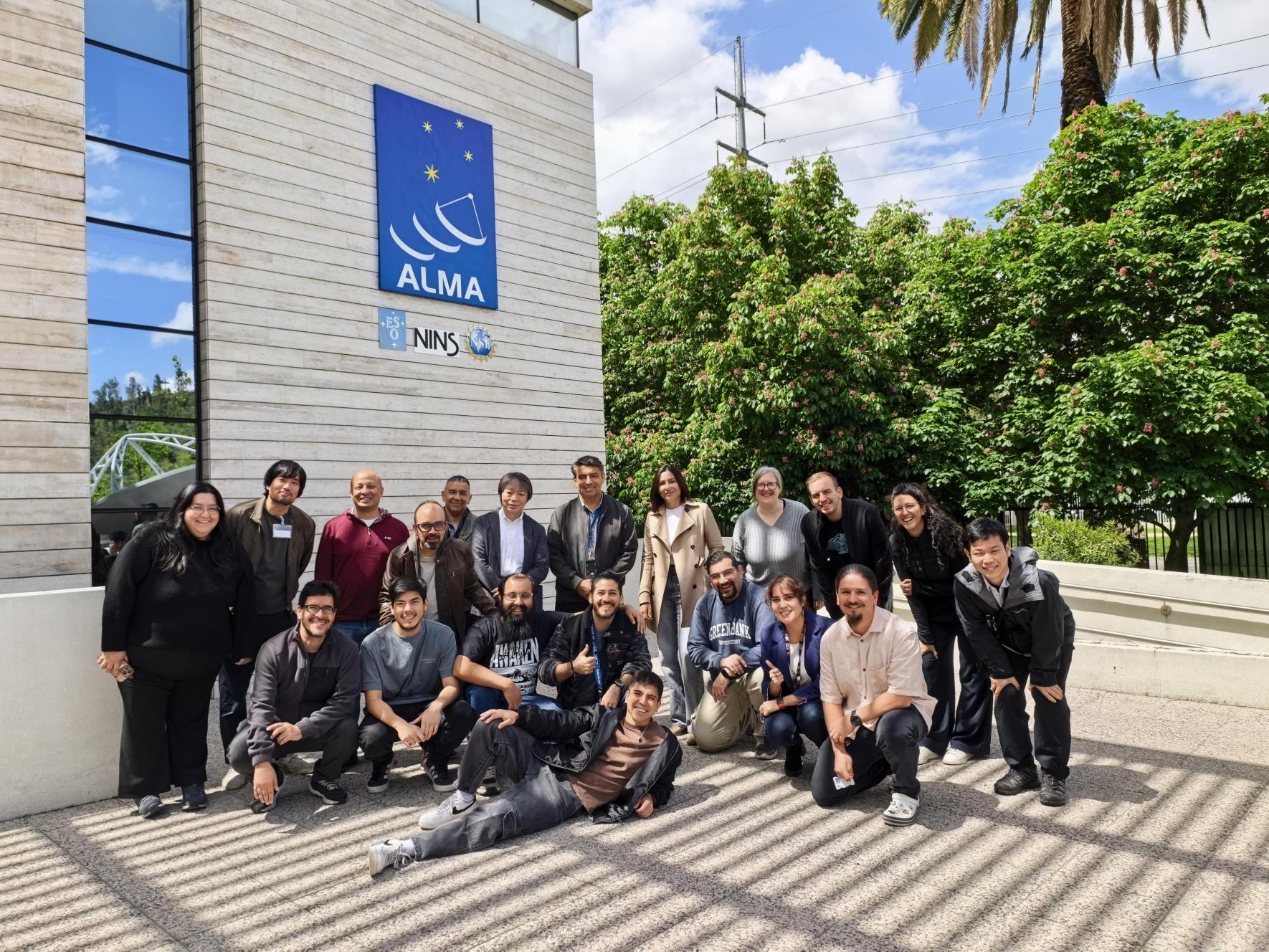
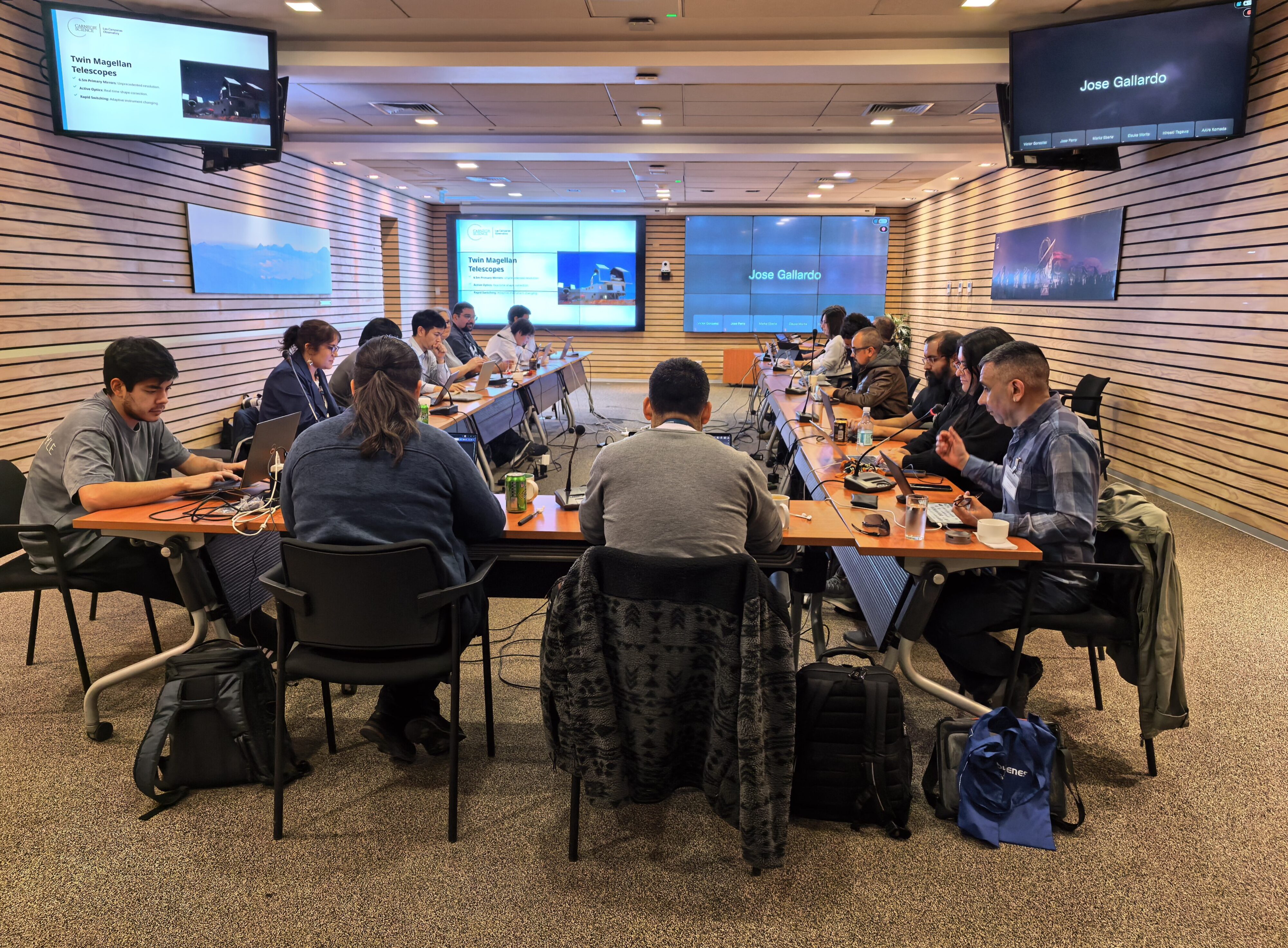
With the goal of consolidating an integrated and resilient digital infrastructure for the next decade, a new edition of the ALMA Dataflow and AES Workshop took place. The gathering brought together cross-functional teams in engineering, software development, and representatives from the various ALMA Regional Centers (ARCs) to coordinate current operations and future observatory requirements.
Although the workshop was structured into two blocks, the first three days dedicated to Dataflow and the following three focused on ALMA Environment Standardization (AES), attendees participated seamlessly across both tracks. This reflected the need to address data processing, software applications, and infrastructure as an interconnected ecosystem that spans both local headquarters and regional centers.
“The main benefit of these meetings is that they allow us to address ALMA’s challenges as a global system—strengthening coordination between the different centers, sharing experiences, and developing joint solutions. For the scientific community, this translates into more reliable services, more efficient processing, and more timely access to scientific data,” highlighted José Parra, Archive / Pipeline Operations Manager.
A Common Challenge: Preparing for the WSU
One of the key topics of the workshop centered on the progress of the Wideband Sensitivity Upgrade (WSU). This major instrumental upgrade will exponentially increase the interferometer’s data capture capacity, posing a direct challenge for storage systems, databases, and associated software platforms. Technical discussions delved into the architectural modifications required to process massive streams of information without compromising operational stability. In this context, operational visits to the control rooms allowed participants to contrast theoretical models with real-time data flow, gauging the technical impact that broadband expansion will have across the entire scientific processing cycle.
“The WSU represents one of the largest technological leaps for the observatory and demands highly coordinated work. Being able to meet in person with teams from the ARCs allows us to align standards and prepare our protocols and procedures to manage critical components, such as the replicated database and data delivery to the scientific community,” highlighted Víctor González, Software Engineer I.
Cybersecurity, Risk Management, and Platform Optimization
As the observatory’s infrastructure grows in complexity and connectivity, system protection is solidified as a non-negotiable priority. The security analysis covered the implementation of international regulatory frameworks (such as the NIST CSF and standards promoted by Trusted CI), establishing models for comprehensive vulnerability management, timely incident response, and continuous risk assessment.
In terms of technology platforms, discussions emphasized the need to maintain strict standardization levels and preventive server patching based on criticality. Additionally, participants reviewed critical measures for architectural hardening, such as schema segmentation in relational databases to restrict applications to least-privilege access, and the systematic implementation of encryption across network transfers and enterprise data engines. In parallel, performance optimization was addressed through SQL tracing and fine-tuning databases, allowing teams to identify bottlenecks, such as full table scans, and ensure that operational growth does not impact archive service stability.
“Participating in this space enabled us to share experiences and receive direct feedback on delicate technical areas. The greatest outcome of these sessions is having built a shared understanding and clear operational agreements between the regional centers and the JAO,” emphasized Víctor.
Practical Innovation: Automation and Artificial Intelligence
The integration of emerging technologies moved past theoretical concepts to focus on solutions with direct operational utility. During the workshop, several proposals were presented to leverage artificial intelligence and automation for simplifying the management of large storage volumes, enhancing observability and database monitoring through locally generated intelligent reports, and processing cluster metrics from Influx telemetry streams.
“One of the greatest contributions of AI is helping us anticipate problems, from predicting data growth to optimizing infrastructure, automating reports, or detecting potential failures. All of this, combined with our teams’ expertise and knowledge, will allow us to make better decisions and dedicate more time to higher-value tasks,” José explained.
Furthermore, new dashboards were highlighted, designed to optimize the supervision of high-performance computing (HPC) systems managed under architectures like TORQUE, PBS, and SLURM. These initiatives demonstrate a move toward more proactive technology management, offering solutions born from specific observatory requirements that carry high scalability potential to benefit the entire global network of processing centers.
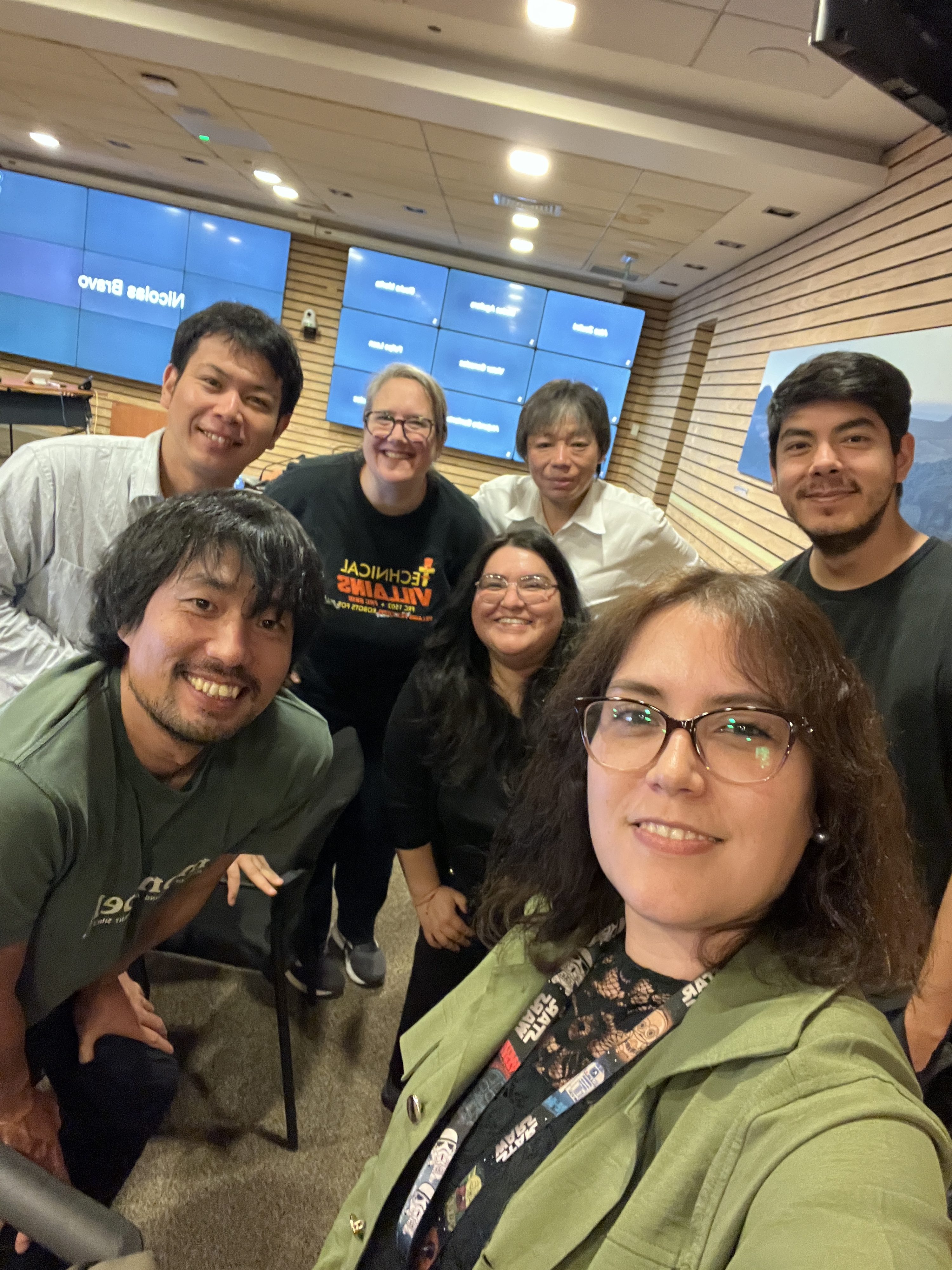
“Organizing this workshop was a very enriching experience from a human perspective. Meeting in person allowed us to strengthen relationships and build trust essential for global collaboration,” explained Victoria Reyes, Technical Data Flow Engineer. “In addition to sharing concrete technical progress in infrastructure, cybersecurity, and artificial intelligence, the meeting helped us build a far more connected and collaborative vision to face ALMA’s future challenges,” she added.
Additionally, José reflected on the human value of holding these global gatherings in person: “Although we have excellent tools for remote collaboration today, nothing replaces meeting face-to-face, talking, sharing experiences, and getting to know each other beyond work. It is in those moments that relationships of trust are built, making working together much easier, closer, and more enjoyable.”