Q3 All Hands: Record-Breaking Observations, Commitment to Financial Sustainability, and Enhanced Facilities Security
ALMA Observatory Director, Sean Dougherty, delivered an operational performance update highlighting the early completion of the annual target of 4,300 science hours, surpassing 5,000 scientific publications, and outlining the budget control strategy for the close of 2026.
During the latest quarterly All-Hands meeting, ALMA leadership presented a detailed overview of the observatory’s operational, financial, and human resources management. The meeting recognized the dedicated efforts of on-site teams, addressed the current economic landscape amidst rising operating costs, and outlined the measures being implemented to reinforce security at the Operations Support Facility (OSF) and enhance human resources management.
Unprecedented Scientific Performance and WSU Progress
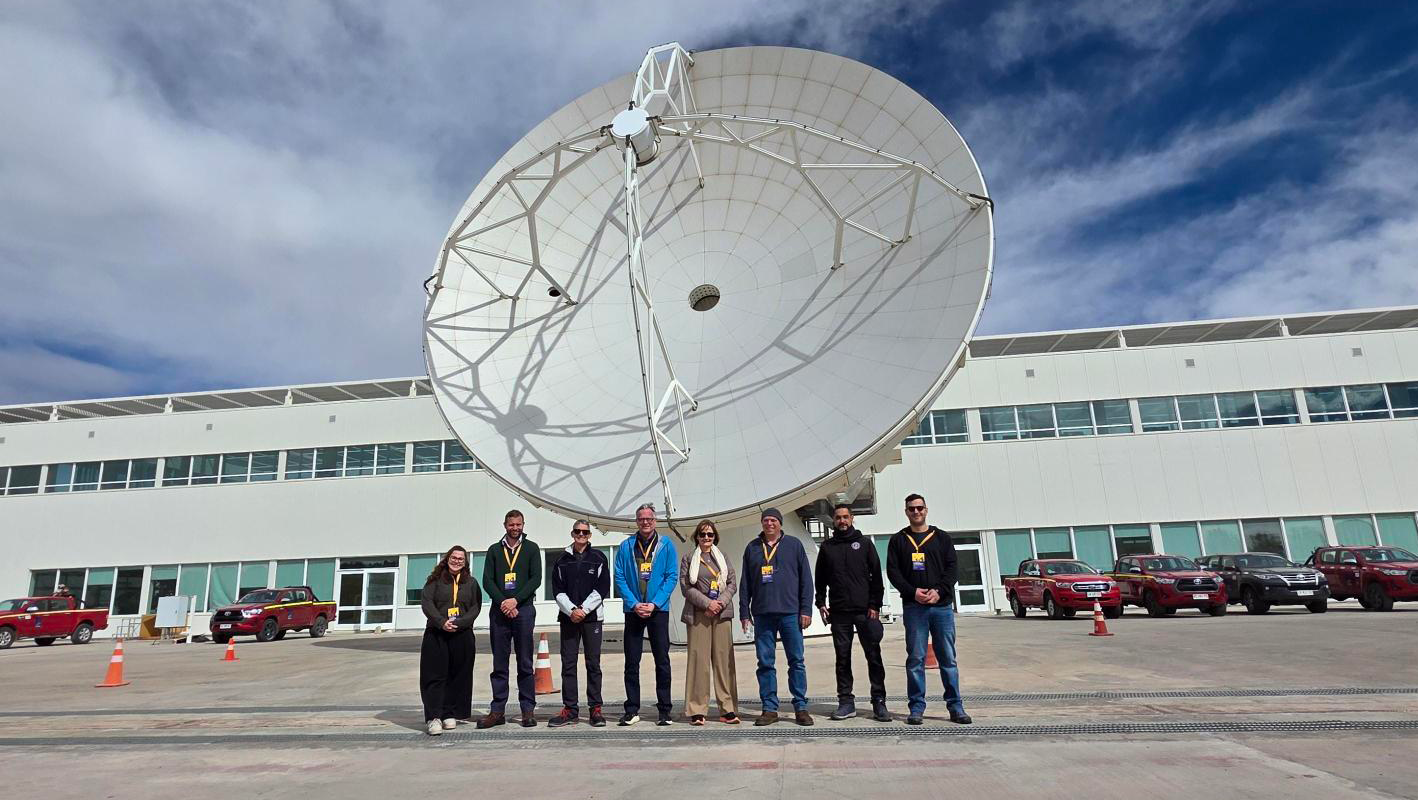
The period’s standout milestone was the early achievement of the annual observing target. Despite a severe winter marked by heavy snowfall in August that hindered access to the Array Operations Site (AOS), the radio telescope reached 4,300 hours of successful observations a month ahead of schedule. This was complemented by an average availability of 44.5 antennas (exceeding the key performance indicator of 43) and a data delivery rate within 30 days of over 93%.
“This is excellent news. Reaching our annual target of 4,300 hours of successful observations was made possible by everyone’s immense effort. It confirms that the operational approach we have adopted for the telescope is here to stay,” Sean Dougherty highlighted.
On the scientific front, ALMA surpassed 5,000 refereed publications, maintaining a publication rate of more than one scientific paper per day and accumulating over 200,000 citations. Usage of the observatory’s public archive exceeded 30%, placing the facility on par with landmark observatories such as the Hubble Space Telescope.
Regarding technological modernization, the Wideband Sensitivity Upgrade (WSU) program achieved major milestones after successfully passing key preliminary design reviews for software, optical fiber infrastructure, and computing systems. Furthermore, civil works at the OSF for the correlator room and fiber optics system are progressing steadily, with completion targeted for early 2027.
Budgetary Transparency and Resource Optimization
In terms of finance, Sean shared the projections discussed during the recent Head of Administration Advisory Group (HAAG) meeting. Driven by international fuel cost increases stemming from geopolitical tensions in the Strait of Hormuz, unscheduled fuel tank repairs, and costs associated with collective bargaining, pressure on the annual budget is anticipated.
To manage this scenario without resorting to a spending freeze, leadership will enforce the following optimization criteria:
- Hiring and Travel: Recruitment and training activities will be strictly prioritized to focus on mission-critical roles and data collection continuity.
- Inventory Management: Warehouse and spare parts management will be reinforced to maximize the utilization of existing stock.
- Non-Critical Projects: Non-urgent purchases will be deferred to future fiscal years.
“This is not a spending freeze, but rather taking responsible measures to manage costs while continuing to operate the observatory safely and effectively,” the Director emphasized.
Enhanced OSF Security and a New Vision for Human Resources
Iván López, Health, Safety, Security & Environment (HSSE) Manager, presented progress on the Security Improvement Plan implemented following the vehicle theft in June. The plan focuses on four priority pillars: increasing nighttime security personnel with active patrols, dedicated 24/7 CCTV monitoring equipped with night-vision technology and body-worn cameras, a centralized key-management and access-control system, and evaluating blind spots and lighting in compliance with dark-sky regulations.
“Security is not just an organizational responsibility; it is everyone’s duty. We need staff to follow protocols, display their IDs, and report any unusual activity,” Iván explained.
Finally, the meeting served as the official presentation of Gisella Yaksetig as the new Human Resources Manager. Bringing over 25 years of international expertise, Yaksetig outlined the core pillars of her leadership: active listening, unifying HR support for both local and international personnel, streamlining service channels, and updating processes to build trust and transparency across the organization.
“In this first phase, my principle is very simple: listen, connect, and understand the organization’s needs. We will continuously build trust through consistency, clear policies, and an open-door policy to listen to every team member,” Gisella concluded.